File Upload API Integration: Common Questions

File upload APIs let you transfer files (like images, videos, and documents) between users and servers. They’re key for building modern apps that handle file uploads efficiently. This article covers the basics, common challenges, security, handling large files, and cross-platform compatibility. Here’s what you’ll learn:
- What a File Upload API does: It enables seamless file transfers between apps and servers via client-side uploads and server-side processing.
- Challenges: Issues like large file handling, encoding mismatches, and progress tracking are common but manageable with proper configurations.
- Security: Options include API keys, OAuth 2.0 with OpenID Connect, and mutual TLS to protect uploads.
- Large File Handling: Use server-side limits, asynchronous processing, and direct uploads to reduce strain.
- Framework Integration: Works with React, Vue, Angular, and more, plus backend languages like Python, Ruby, and PHP.
- Pricing Options: Plans range from $16/month for testing to $250/month for enterprise needs.
This guide simplifies file upload integration, offering practical tips to improve performance, security, and user experience.
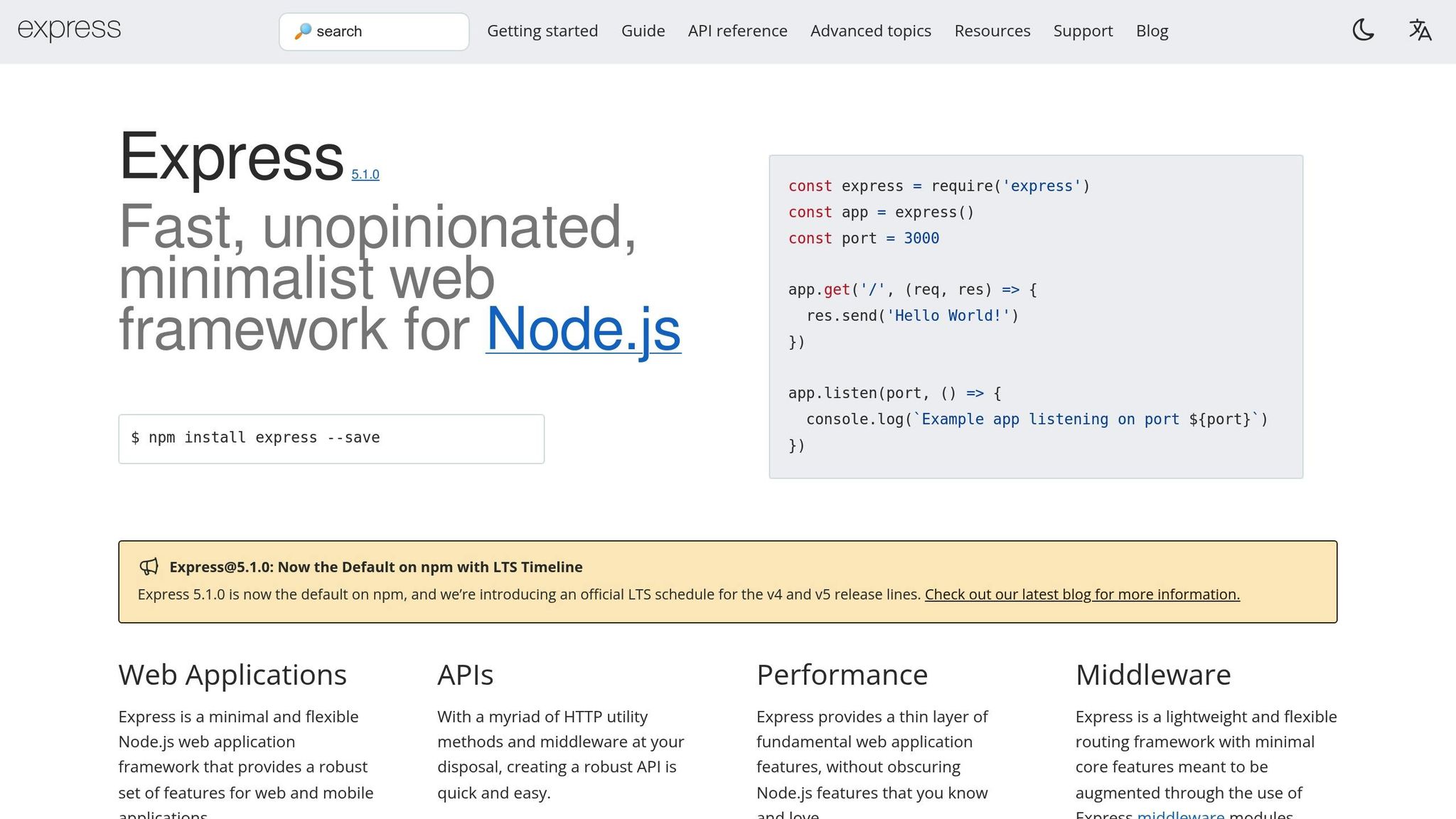
Node.js File Upload API with Express Tutorial
Authentication and Security in File Upload APIs
Strong authentication measures are essential to safeguard file access and ensure that only authorized users can interact with your system.
Authentication Methods
API Keys are a straightforward way to authenticate requests. Each request includes a unique key, usually in the header, which helps the server confirm the client's identity. This method works especially well for server-to-server communication, where the API key can be securely stored and managed.
OAuth 2.0 with OpenID Connect (OIDC) offers a more advanced approach to authentication and authorization. OAuth 2.0 serves as a framework for granting access, while OIDC builds on it by adding an identity layer. This combination not only ensures secure access but also enables features like Single Sign-On, making it a preferred choice for modern applications.
Mutual TLS (mTLS) takes security up a notch by requiring both the client and server to verify each other's certificates. This two-way authentication encrypts data during transmission and is particularly crucial for internal APIs, microservices, and sensitive transactions in industries like finance.
How to Handle Large File Uploads
Handling large file uploads can strain server resources, leading to memory overuse, timeouts, or even crashes. To avoid these issues, it's essential to configure your server properly.
Server-Side Requirements
One of the first steps is setting file size limits to protect your server. For instance, in Flask, you can set a limit like this:
app.config['MAX_CONTENT_LENGTH'] = 16 * 1024 * 1024
This example restricts uploads to 16 MB, ensuring your server isn't overwhelmed by excessively large files before they can be processed.
Custom error handling is also important for providing clear feedback to users. In Flask, you can create an error handler for HTTP 413 (Request Entity Too Large) to display a user-friendly message, such as "File is too large!" instead of a generic server error.
For more resource-intensive tasks, it's a good idea to process files asynchronously. After saving a file, you can use a task queue like Celery to offload heavy operations. For example:
process_file.apply_async(args=[file_path])
This approach allows your API to respond with a 202 Accepted status immediately, while the actual file processing happens in the background. Platforms like Simple File Upload already incorporate these strategies, making it easier to manage large file uploads.
How Simple File Upload Handles Large Files
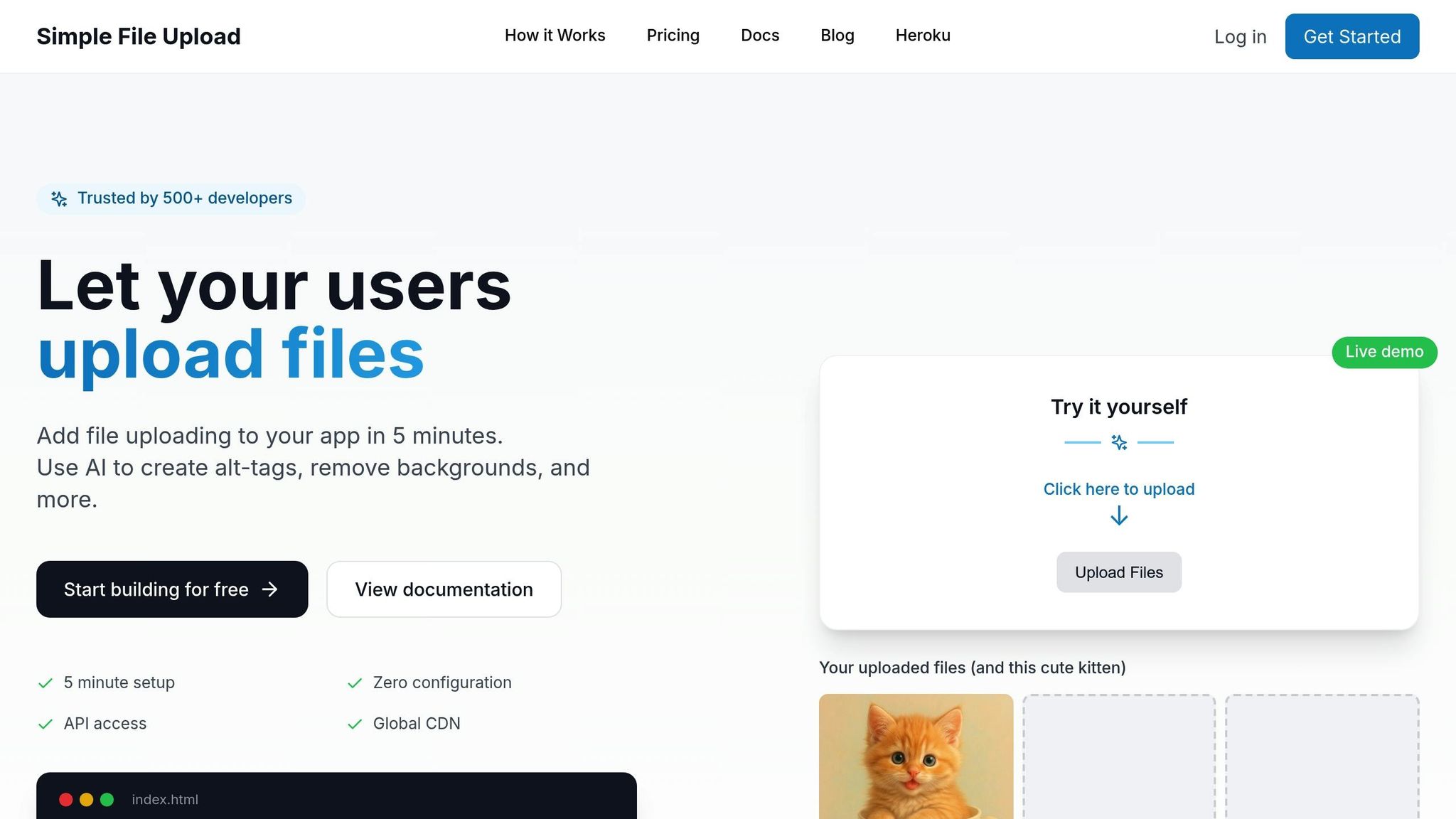
While server-side configurations are essential, Simple File Upload simplifies the process with built-in features tailored for large file handling. The platform offers tiered file size limits to suit different needs: the Basic plan supports files up to 5 MB, while the Pro and Custom plans allow uploads up to 50 MB. This flexibility helps developers select the best option for their applications.
With direct uploads, files are sent straight to Simple File Upload, bypassing your server entirely. This reduces server load and minimizes the risk of timeouts during large file transfers. Once the upload is complete, your application receives a callback notification.
To ensure fast and reliable access, Simple File Upload uses a global CDN delivery network. This setup serves files from multiple geographic locations, improving performance across the United States and beyond. For applications requiring higher reliability, the Custom plan includes redundancy across storage providers, replicating files across multiple systems to prevent data loss and ensure consistent availability.
Cross-Platform Compatibility and Framework Integration
Creating a reliable cross-platform file upload system requires thoughtful planning to ensure smooth performance across various browsers, devices, and development environments. It also needs to integrate effortlessly with popular frameworks and programming languages.
Cross-Browser and Cross-Device Compatibility
Different browsers handle file uploads differently, which can lead to inconsistent user experiences. Mobile browsers, for instance, often enforce stricter limits on file uploads. To address this, it's important to implement file size validation and provide clear error messages when issues arise. Mobile interfaces also bring unique challenges, like managing camera access, photo library permissions, and variations in file picker designs.
Drag-and-drop functionality is another area where browser behavior varies. While most modern desktop browsers support drag-and-drop uploads, many mobile browsers do not. A progressive enhancement approach ensures that your upload interface works across all devices, offering basic functionality for unsupported environments and enhanced features where possible.
Network conditions also play a big role in cross-platform performance. Mobile users often face slower or unstable connections, so adding retry logic and upload progress indicators can help maintain a smooth and reliable user experience.
Beyond addressing device compatibility, integration with modern frameworks is designed to be straightforward.
Framework Integration Guide
The platform emphasizes its flexibility with a clear statement: it "Works with any framework, any language, anywhere".
For React developers, installation is quick and easy using npm or yarn:
npm install simple-file-upload-react
Once installed, you can embed the web component directly into your React components:
<simple-file-upload public-key="YOUR_PUBLIC_KEY"></simple-file-upload>
Vue and Angular developers can also use this web component, ensuring a consistent integration process across frameworks.
If you're working with vanilla JavaScript, the integration is equally simple through a CDN:
<script type="module" src="https://cdn.simplefileupload.com/simple-file-upload.latest.js"></script>
You can then listen for upload completions using an event listener:
document.querySelector('simple-file-upload').addEventListener('change', (event) => {
    console.log('Files uploaded:', event.detail.allFiles);
});
This unified approach ensures a consistent and seamless file upload experience, whether you're using React, Vue, Angular, or plain JavaScript.
Multi-Language Programming Support
Simple File Upload also supports a wide range of backend programming languages, including JavaScript, TypeScript, Python, Ruby, PHP, Go, Rust, and Java. This broad compatibility allows developers to integrate file upload functionality into their existing tech stacks without needing to build custom solutions from scratch.
For example, Python developers can use frameworks like Flask or Django to handle upload callbacks, process metadata, and apply custom logic post-upload. Ruby on Rails applications can take advantage of direct uploads to reduce server load, while PHP developers can integrate file uploads without worrying about adjusting server configurations for file size limits or timeouts.
The platform's universal API design ensures consistent authentication, error handling, and response formats across all supported languages. This flexibility means development teams can stick with their preferred tools and frameworks while benefiting from enterprise-level file upload capabilities.
Troubleshooting File Upload API Issues
When working with file upload APIs, challenges can arise that disrupt the user experience. Here are some practical troubleshooting tips to ensure a smoother upload process.
How to Fix Upload Failures
Network failures are a common issue, especially with large files or unstable connections. To address this, implement exponential backoff retries - for example, retry failed uploads after 2, 4, and 8 seconds.
File size limitations can also cause problems. Use client-side file size validation to catch oversized files early and display clear error messages to users.
Unsupported file format errors occur when users attempt to upload files that your application doesn’t accept. Validate file extensions and MIME types on the client side. Maintain a whitelist of acceptable formats and check against it before beginning the upload.
Authentication token expiration can interrupt lengthy uploads. To prevent this, refresh authentication tokens automatically during the upload process without requiring user intervention.
These solutions provide a solid foundation for handling common upload issues. Next, let’s look at how to interpret error responses from the API.
Understanding API Error Messages
File upload APIs typically provide structured error responses that can help diagnose issues. Start by examining HTTP status codes:
- 413: The file is too large.
- 415: The file type isn’t supported.
- 401: Authentication problems.
Beyond status codes, error response bodies often contain additional context, such as error codes, descriptive messages, or details about maximum file sizes and supported formats. Many APIs also include a request ID in error responses, which can be useful when contacting support or reviewing server logs.
For client-side debugging, check the browser console and network logs. Look out for CORS errors, which indicate cross-origin request issues, or JavaScript errors that could disrupt the upload interface.
On the server side, server logs provide a detailed view of the upload process, including authentication checks, file validation, and storage operations. Use timestamps and request IDs to correlate client-side and server-side logs when troubleshooting persistent issues.
Clear and actionable error messages can significantly improve the user experience, which brings us to the next point.
Better User Feedback During Uploads
Improving user feedback during uploads helps manage expectations and reduces frustration. Here are some ways to enhance the experience:
- Progress indicators: Show real-time progress percentages and estimated completion times instead of generic messages. This reassures users that the upload is working and provides a sense of how long it will take.
- Real-time status updates: Display messages like "Validating file", "Uploading", and "Processing" to keep users informed about each stage of the upload process. This transparency helps reduce uncertainty.
- Specific error notifications: Avoid vague messages like "Upload failed." Instead, provide clear explanations such as "File size exceeds 10MB limit" or "Only JPG, PNG, and GIF files are supported." Include actionable suggestions, such as "Compress your file and try again" or "Convert your file to a supported format."
- Retry mechanisms: Combine automatic retries for temporary issues with a "Try Again" button for manual restarts. Show the number of retry attempts and allow users to cancel if needed.
- Upload queues: For multiple file uploads, display a list with individual progress bars and status indicators. Let users pause, resume, or cancel specific uploads without affecting others in the queue.
- Success confirmations: Provide clear messages once uploads are complete, including the file names. Offer options to upload more files or access the uploaded content immediately.
Simple File Upload Pricing and Plans
Simple File Upload offers straightforward monthly pricing, making it easy to choose a plan that fits your needs. With reliable performance built in, these plans are designed to help your file upload integration grow alongside your requirements.
Simple File Upload Plan Overview
Simple File Upload offers four pricing tiers:
- Staging Plan: $16/month. Includes 20 MB of storage and a 5-byte max file size, ideal for testing and development.
- Basic Plan: $35/month. Provides 30 GB of storage and a 5 MB max file size, along with AI-powered features like 20 background removals per month, making it suitable for small to medium applications.
- Pro Plan: $80/month. Offers 100 GB of storage and supports files up to 50 MB, catering to businesses with higher upload volumes.
- Custom Plan: $250/month. Includes 500 GB of storage and a 50 MB max file size, designed for enterprise-level needs with significant file handling demands.
Every plan comes with essential features like a file upload widget, CDN delivery, redundant cloud storage across two providers, and personalized integration support. Plus, you can explore the service risk-free with a 7-day free trial.
How to Choose the Right Plan
Selecting the best plan depends on factors like storage needs, file size limits, AI feature usage, and budget. Here’s how to narrow it down:
- Storage Needs: Estimate how much data your application will store, keeping in mind both current usage and future growth. Larger storage requirements may push you toward the Pro or Custom plans.
- File Size Limits: If your users need to upload files larger than 5 MB, the Basic plan won’t cut it. For larger uploads, the Pro or Custom plans, with their 50 MB file size limits, are better options. For smaller uploads like documents or images, the Basic plan is usually sufficient.
- AI Features: If you plan to use AI-powered background removal, consider how often you’ll need it. The Basic plan includes 20 removals per month, which works for light usage. For heavier AI demands, you may need to explore higher-tier plans.
- Budget: Fixed monthly pricing makes it easy to manage costs without worrying about unexpected charges. Choose a plan that aligns with your budget while meeting your technical needs.
If your project requires more than the Custom plan offers, you can contact the customer success team for tailored solutions, such as higher storage limits or increased file size capacities.
Plan Comparison Table
| Plan | Monthly Price | Storage | Max File Size | AI Features | Key Benefits |
|---|---|---|---|---|---|
| Staging | $16 | 20 MB | 5 Bytes | – | Ideal for testing and development |
| Basic | $35 | 30 GB | 5 MB | 20 background removals/mo | Great for small to medium apps, includes AI tools |
| Pro | $80 | 100 GB | 50 MB | – | Perfect for handling higher upload volumes |
| Custom | $250 | 500 GB | 50 MB | – | Enterprise-grade plan with dedicated support |
Unlike credit-based systems, Simple File Upload’s fixed monthly pricing eliminates the risk of unpredictable bills caused by credit overages or hidden fees. This ensures a clear and consistent cost structure for your projects.
Conclusion
Key Points
Integrating a file upload API becomes much simpler when you understand the basics. Secure authentication plays a critical role in protecting file uploads, while features like file type validation and size limits add an extra layer of safety for both your application and its users.
For handling large files, techniques such as chunked uploads and optimizing server settings are essential. Ensuring consistency across platforms helps maintain reliable uploads, no matter the device. And when something goes wrong, providing clear progress indicators and error messages makes troubleshooting easier for users.
These practices are the foundation of a strong and reliable file upload system.
Why Choose Simple File Upload
Simple File Upload tackles common file upload challenges with ease, offering a solution that simplifies API integration. From managing cloud storage to ensuring global content delivery through a CDN, it handles the technical heavy lifting so you can focus on building your application.
With transparent pricing starting at $35 per month for the Basic plan, budgeting is straightforward. Each plan includes must-have features like a prebuilt uploader widget and direct file upload capabilities.
Built with developers in mind, Simple File Upload works seamlessly with frameworks like React, Vue, and Angular. It also supports multiple programming languages, including JavaScript, Python, and Ruby. For added peace of mind, select plans provide dedicated support to help ensure smooth integration and reliable performance.
FAQs
What are the best practices for securing file uploads with authentication methods like OAuth 2.0 and mutual TLS?
To protect file uploads, implement OAuth 2.0 for strong authentication and mutual TLS (mTLS) to establish a secure connection between the client and server. OAuth 2.0 ensures that only authorized users can access the upload functionality, while mTLS uses digital certificates to verify both the client and server, adding an extra layer of protection.
Make sure sensitive data is encrypted during transmission, and update certificates regularly to minimize potential vulnerabilities. Together, these practices create a safer framework for managing file uploads.
How can I manage large file uploads efficiently without putting too much strain on my server?
When dealing with large file uploads, one effective approach is to divide the file into smaller chunks and upload them separately. This method eases the load on your server and enhances reliability. Another smart move is to implement resumable uploads, which let users pick up where they left off if the upload gets interrupted.
To keep things running smoothly, set file size limits to avoid overwhelming your server and keep an eye on its performance during uploads. For even better efficiency, consider offloading large files to cloud storage. This not only reduces the burden on your server but also offers scalable storage options. Together, these techniques create a more seamless and reliable experience for both your application and its users.
How does Simple File Upload work seamlessly with frameworks like React and Vue while ensuring compatibility across platforms?
Simple File Upload works seamlessly with popular frameworks like React and Vue, offering tools that make cross-platform integration straightforward. With optimized SDKs and RESTful APIs, it’s built to work smoothly with standard web technologies, ensuring compatibility across various browsers and devices.
To make development easier, Simple File Upload provides comprehensive documentation and ready-to-use components specifically designed for React and Vue. These resources allow developers to quickly implement dependable file upload features, delivering consistent performance across platforms.
Related Blog Posts
Ready to simplify uploads?
Join thousands of developers who trust Simple File Upload for seamless integration.